
The Method of Evidence
Death on the NileThe investigation shows how a detective must revise attractive theories, distinguish unrelated crimes and treat the smallest physical facts as meaningful.
increasing Bearing strength in each event
 decreasing
Bearing strength in each eventdecreasingA Familiar Suspect
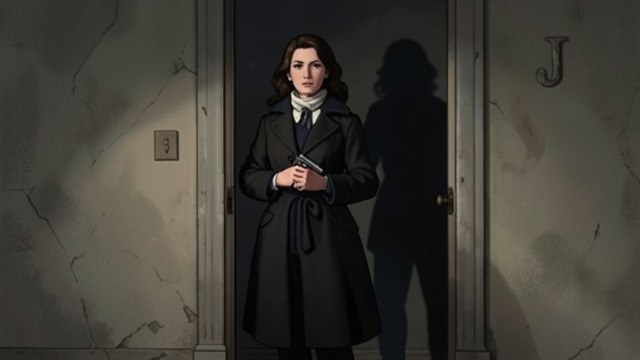
The Easy Explanation
A threat becomes a clue
Jacqueline has publicly threatened Linnet and owns the pistol used in the apparent murder. The J on the wall seems to confirm what the investigators already expect.
Suspicion is not proof
Poirot does not confuse a strong motive with a complete explanation. Jacqueline’s position under supervision and the missing weapon make the apparent solution unstable.
The Alibi Checked

Accounts Compared
Witnesses establish the timeline
Fanthorp and Cornelia describe the shooting in the saloon; Miss Bowers confirms that Jacqueline remained under her care. Their separate accounts make her opportunity to kill Linnet implausible.
Order before accusation
Poirot establishes when each person was present and what they could have done. The investigation advances by checking opportunity rather than responding only to emotion.
The Pistol’s Contradiction

A Clue with Two Histories
Evidence inside the wrapping
The velvet bears marks of a shot fired through it, but Linnet’s wound was made at close range without that wrapping. The pistol’s journey therefore includes more than the murder itself.
An unresolved question
Race proposes panic, but Poirot asks why a killer who intended to frame Jacqueline would remove the very weapon that supported the frame. The inconsistency leads back to the crime’s true timing.
Small Details Accumulate
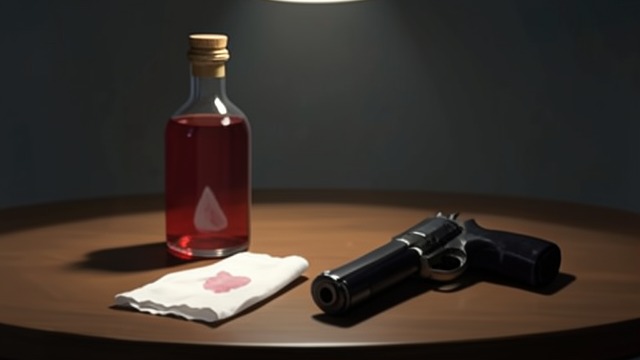
Ink, Stains and Timing
Physical traces
Poirot notices the nail-polish bottle with red ink, the faint pink stain on a cheap handkerchief and the mismatch between the wrapped pistol and the fatal wound. Each detail weakens the simple story.
Separating crimes
The false necklace, Marie’s stealing and Tim’s visit create additional distractions. Poirot keeps those discoveries distinct from the question of who killed Linnet.
A Theory Rebuilt
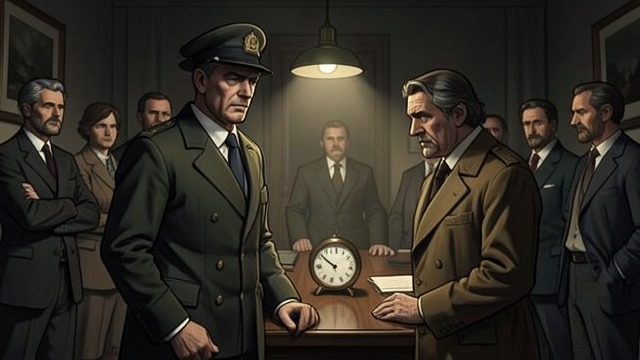
The Facts Reassembled
The hidden sequence
Poirot interprets the witnesses, the gap in the alibis and the later killings as parts of a plan designed before dinner. He recognizes that the apparent spontaneity was staged.
A disciplined conclusion
The solution succeeds because he returns to the beginning and tests the theory against every fact. The novel makes correction, not certainty, the foundation of method.
Immediately after Linnet’s murder
During the first interviews aboard the Karnak
After the weapon is recovered from the Nile
During the cabin searches
Near the end of the return journey
